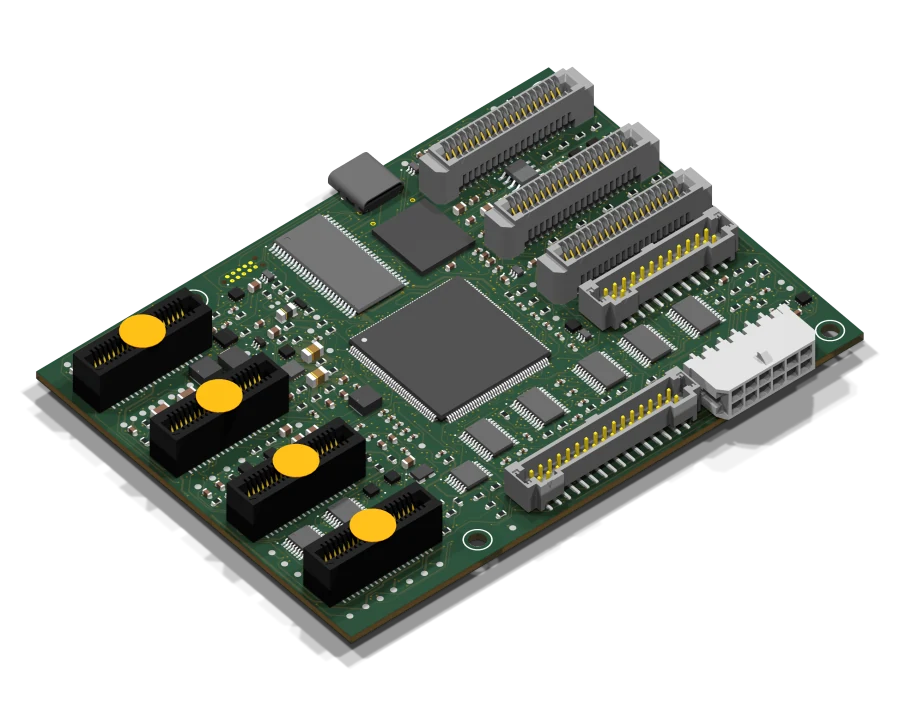
 P1.7
CTRL-BASE
Decide and coordinate
The common controller is intended to own local logic, sequences, feedback checks and records. It provides four acquisition and three actuator positions.
Technical propertiesA machine needs to read its sensors, decide what happens next and check that the action worked. We are developing a modular controller to keep that sequence together, with the inputs and outputs your equipment needs.
Define how inputs lead to a local decision, an actuator command and a feedback check. Application firmware and response times need qualification.
Add actuator cards for on/off control. Include IEPE acquisition only when your equipment needs compatible measurement channels.
The design includes local storage for operating and fault records. Agree what to record and how your team will use it during an OEM evaluation.
Functional illustration · not a physical board layout
Bring inputs, local decisions, actuator commands and feedback into one modular design.
The common controller is intended to own local logic, sequences, feedback checks and records. It provides four acquisition and three actuator positions.
Each card provides four nominal 24 V switched outputs and four feedback inputs. Commands can operate compatible valves, relays or external drive interfaces; they do not supply motor phase power.
The design includes local storage for operating and fault records. Agree what to record and how your team will use it during an OEM evaluation.
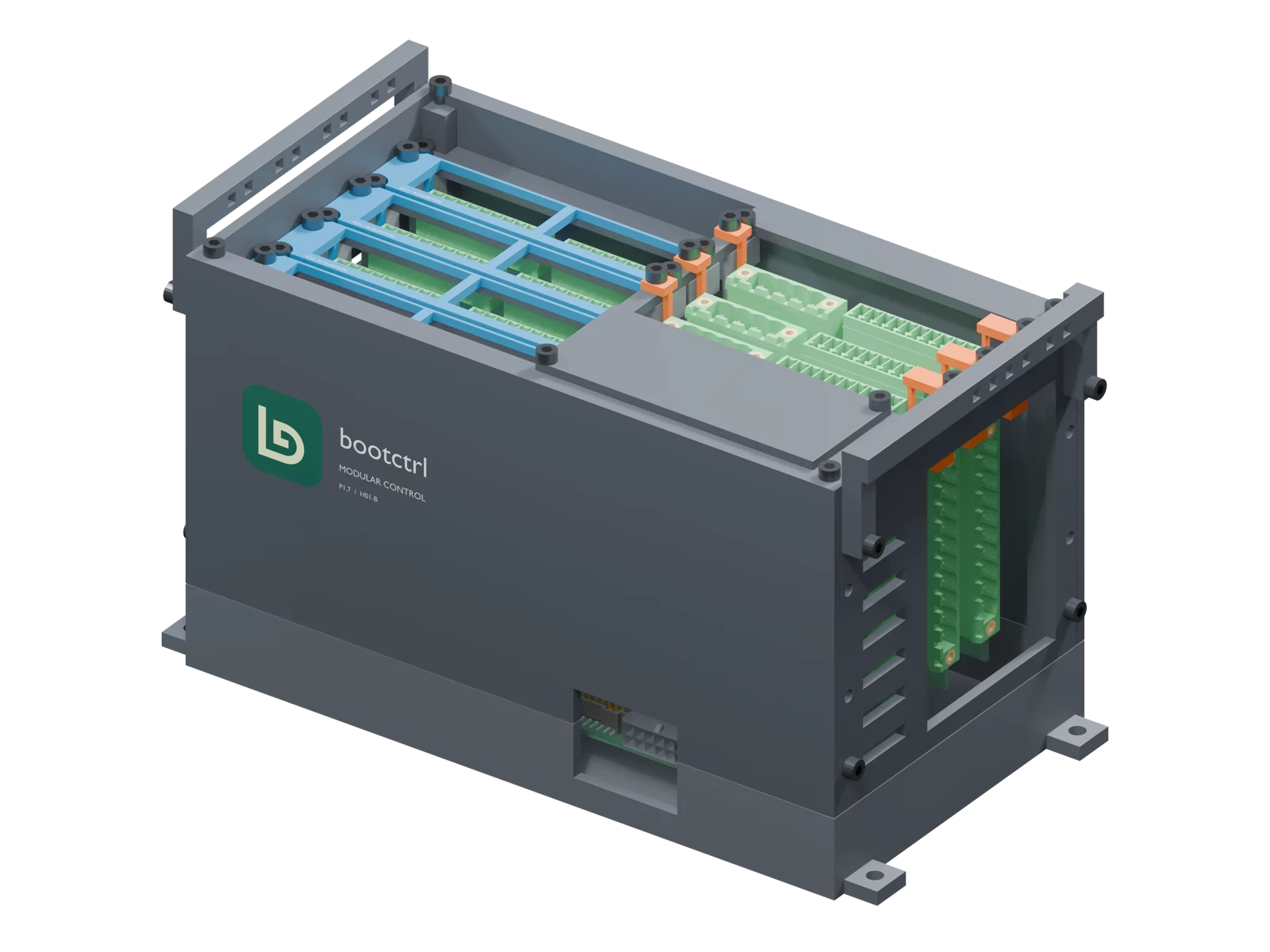
The H01/P1.7 study brings the controller and plug-in cards into one accessible chassis. It shows the proposed assembly and service layout. Mechanical fit, cooling and wiring still need physical checks.
Housing design prototype · H01 / P1.7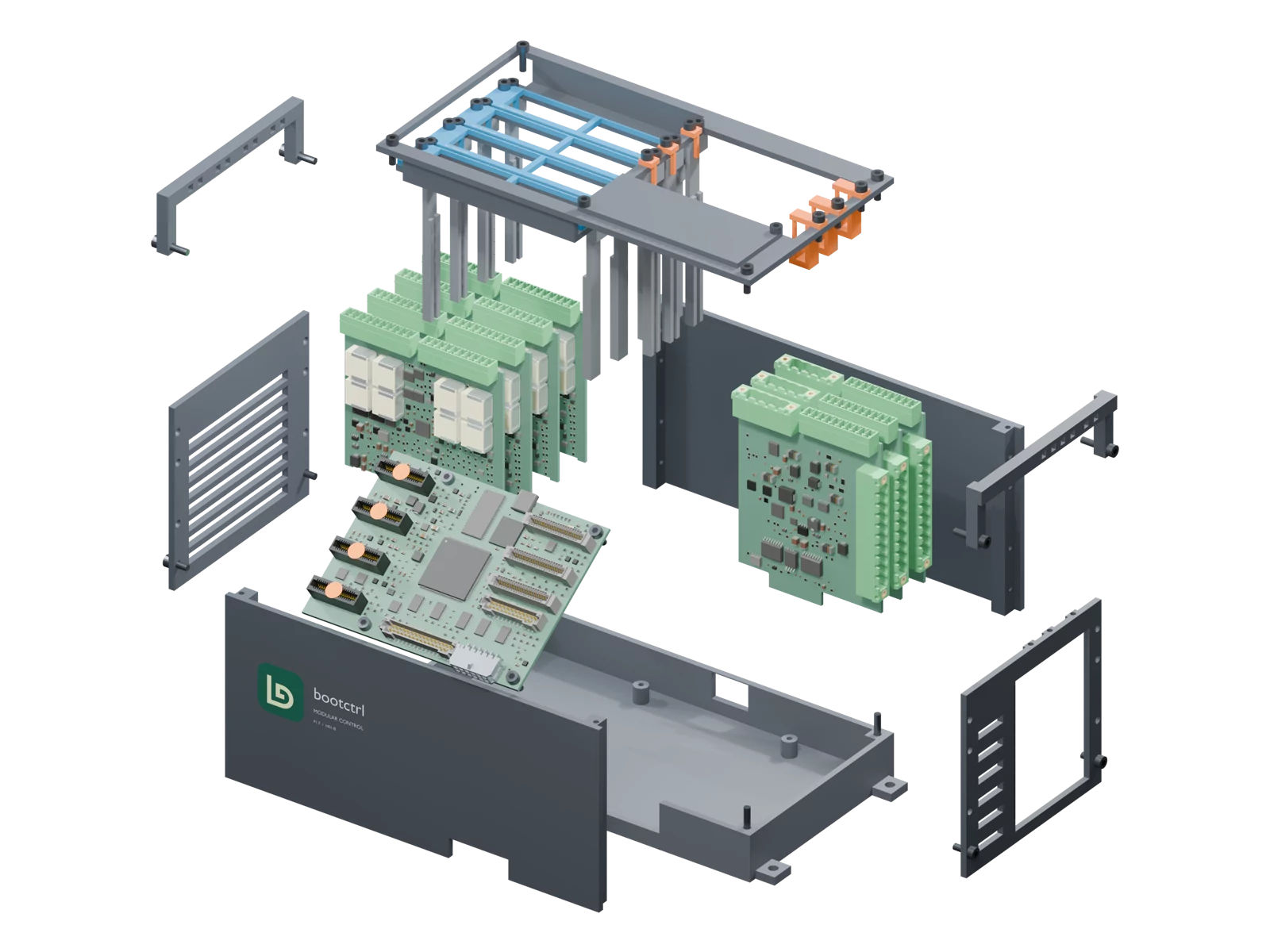
Bring inputs, local decisions, actuator commands and feedback into one modular design.
P1.7The common controller is intended to own local logic, sequences, feedback checks and records. It provides four acquisition and three actuator positions.
Technical properties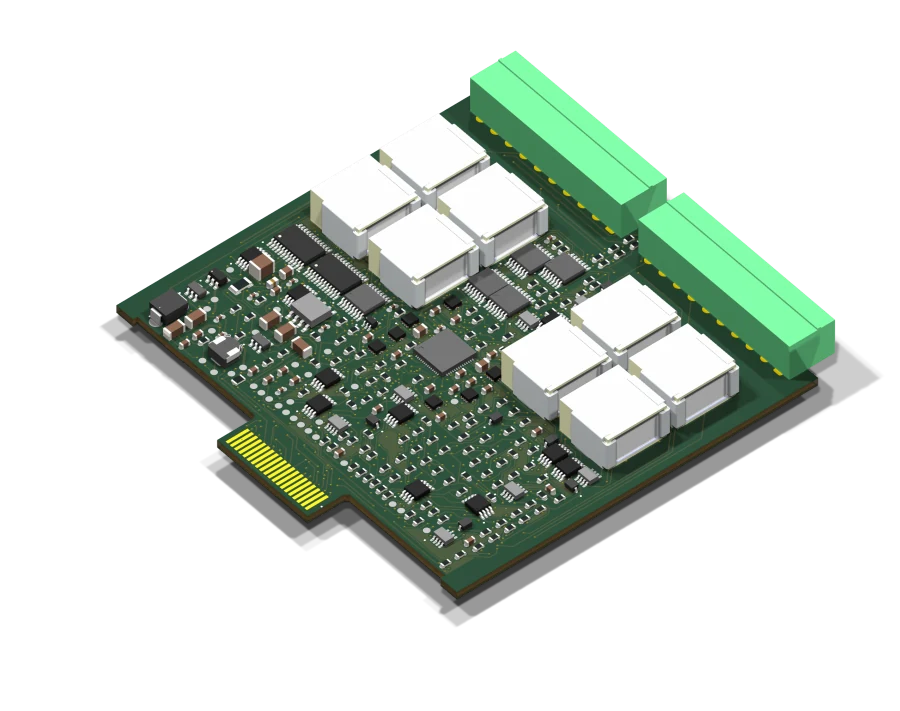 P1.7
An optional card with eight simultaneous IEPE inputs. Use up to four cards for compatible powered sensors; this is not a universal process-input card.
Technical properties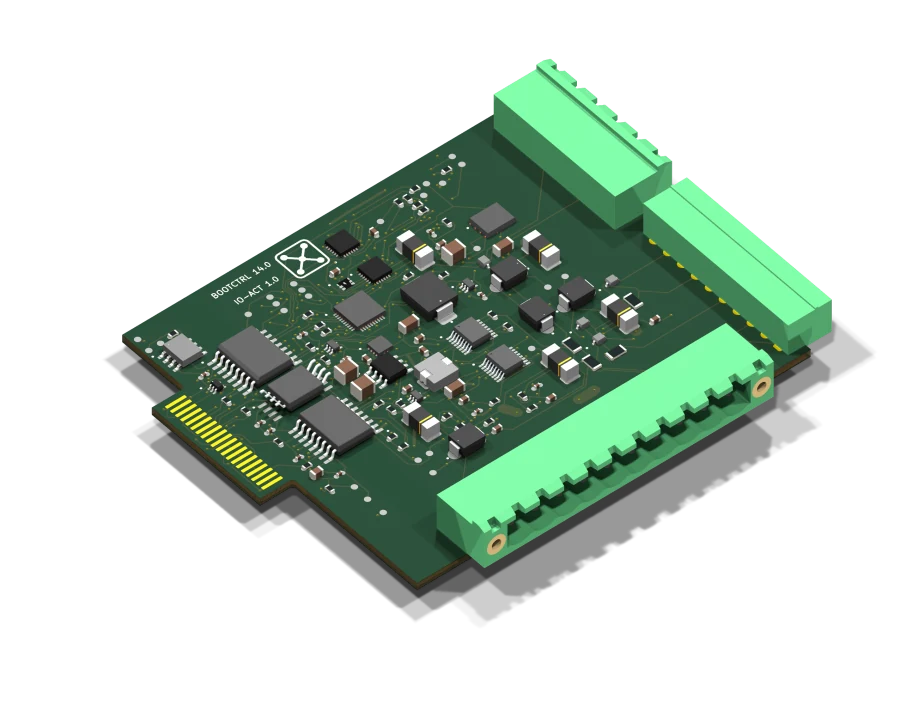 P1.7
Each card provides four nominal 24 V switched outputs and four feedback inputs. Commands can operate compatible valves, relays or external drive interfaces; they do not supply motor phase power.
Technical propertiesEight scanned logical channels with individually selected voltage or current mode. Design ranges: 0–10 V, ±10 V, 0–20 mA and 4–20 mA. Use one V/I connection per channel and external loop power. No direct RTD, thermocouple, IEPE or HART support. Target firmware and physical validation remain open.
Technical propertiesEight industrial field inputs, nominal 24 V with an 18–30 V target range. Local pulse capture and fixed encoder groups are design targets, not eight independent hardware counters. Electrical compatibility, firmware and timing require validation.
Technical propertiesPreserved earlier design render · not the current hardware revision
P.13 engineering candidate. Fabrication approval remains blocked by supply sequencing, reference-drive and communication/display integration issues. Clean PCB checks do not establish functioning firmware, calibrated measurements or qualified mixed-module operation.
A pump is ready for test, but the operator is still repeating the setup. Explore local sequencing that commands the next action, checks the response and keeps the run understandable.
Explore this use caseRepeated fixture operations can consume the time meant for engineering. Keep the operating procedure consistent when comparing pipe supports, mounting choices or mechanical variants.
Explore this use caseA wash-water skid is waiting to run. The start command alone cannot explain whether a valve confirmed its position. A local command-and-feedback sequence gives maintenance a more precise question to investigate.
Explore this use caseA customer asks what happens if the connection disappears. Define which circulation steps belong to the local controller and which records belong to the optional connected platform.
Explore this use caseNo. It is an industrial-controller development project for scoped OEM applications. A general-purpose PLC runtime, completed application firmware and released hardware are not established.
Eight scanned logical channels with individually selected voltage or current mode. Design ranges: 0–10 V, ±10 V, 0–20 mA and 4–20 mA. Use one V/I connection per channel and external loop power. No direct RTD, thermocouple, IEPE or HART support. Target firmware and physical validation remain open. Eight industrial field inputs, nominal 24 V with an 18–30 V target range. Local pulse capture and fixed encoder groups are design targets, not eight independent hardware counters. Electrical compatibility, firmware and timing require validation.
Yes, connecting the platform to bootctrl hardware is the intended direction. The interfaces and software for each product still need to be developed and tested.
Bring a machine sequence, a movement challenge, a structural test or an equipment-service question. Let’s define a useful first evaluation.