Platform
Deterministic loops
How deterministic execution is achieved and verified so control outcomes are predictable and repeatable across deployments.
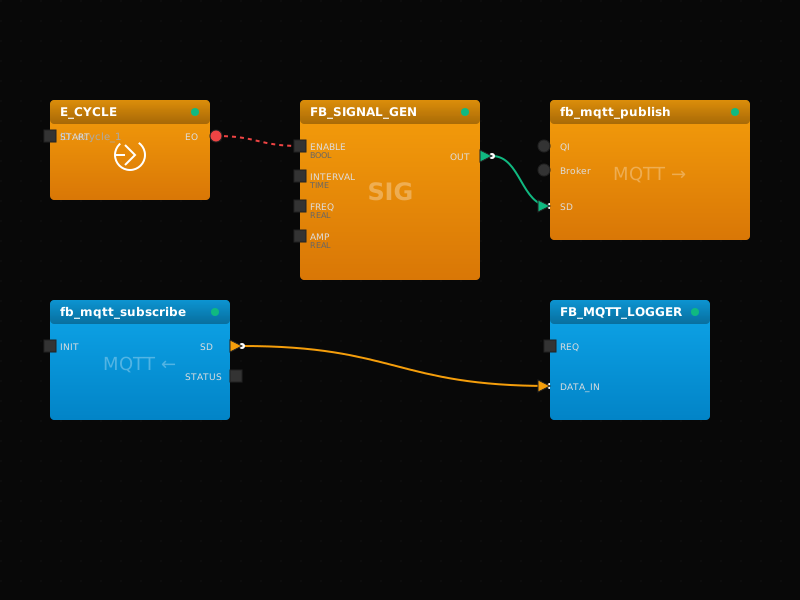
Design intent
Use this lens when implementing Deterministic loops across a fleet: define clear boundaries, make change snapshot-based, and keep operational signals observable.
- Determinism is an operating envelope, not a checkbox
- Measure jitter/latency distributions and compare across releases
- Canary under real load before expanding fleet-wide
What it is
Determinism means the same inputs produce the same outputs in the same sequence and timing guarantees, within defined constraints of the runtime and scheduling model.
Where determinism is lost
- Unbounded I/O calls that block or have variable latency
- Resource contention (CPU, memory, disk) causing scheduling jitter
- Time sources that drift or jump (NTP changes, clock skew)
- Inconsistent configuration across sites (drift from the intended snapshot)
Design constraints
- Determinism is an operating envelope, not a checkbox
- Measure jitter/latency distributions and compare across releases
- Canary under real load before expanding fleet-wide
Architecture at a glance
- Deterministic behavior requires explicit scheduling assumptions and isolated integrations
- Timing-sensitive paths avoid blocking I/O; adapters and buffers mediate variability
- Versioned artifacts reduce drift and unexpected behavior differences
- This is a UI + backend + edge concern: predictable outcomes enable scale
Typical workflow
- Define scope and success criteria (what should change, what must stay stable)
- Create or update a snapshot, then validate against a canary environment/site
- Deploy progressively with health/telemetry gates and explicit rollback criteria
- Confirm acceptance tests and operational dashboards before expanding
System boundary
Treat Deterministic loops as a repeatable interface between engineering intent (design) and runtime reality (deployments + signals). Keep site-specific details configurable so the same design scales across sites.
Example artifact
Implementation notes (conceptual)
topic: Deterministic loops
plan: define -> snapshot -> canary -> expand
signals: health + telemetry + events tied to version
rollback: select known-good snapshot
Why it matters
- Predictable behavior for safety and quality
- Repeatable debugging and incident reproduction
- Confidence when rolling out changes across a fleet
Engineering outcomes
- Determinism is an operating envelope, not a checkbox
- Measure jitter/latency distributions and compare across releases
- Canary under real load before expanding fleet-wide
Quick acceptance checks
- Avoid unbounded operations in timing-critical loops
- Confirm CPU/memory budgets and scheduling assumptions per device class
Common failure modes
- Blocking I/O on hot paths introducing jitter
- Different hardware/software environments producing different timing behavior
- Out-of-order events due to batching/clock skew
- Resource pressure causing scheduling variability under load
Acceptance tests
- Verify the deployed snapshot/version matches intent (no drift)
- Run a canary validation: behavior, health, and telemetry align with expectations
- Verify rollback works and restores known-good behavior
In the platform
- Clear runtime configuration and scheduling primitives
- Versioned artifacts so execution matches the intended snapshot
- Health checks and traces to validate real-world behavior
How to validate
- Compare behavior across sites running the same snapshot under similar load
- Use event/telemetry traces to confirm ordering and timing assumptions
- Introduce canary rollouts and monitor health signals before broad rollout
Implementation checklist
- Avoid unbounded operations in timing-critical loops
- Confirm CPU/memory budgets and scheduling assumptions per device class
- Monitor jitter signals and correlate regressions to snapshot IDs
- Canary test under realistic load before fleet expansion
Rollout guidance
- Start with a canary site that matches real conditions
- Use health + telemetry gates; stop expansion on regressions
- Keep rollback to a known-good snapshot fast and rehearsed
Acceptance tests
- Verify the deployed snapshot/version matches intent (no drift)
- Run a canary validation: behavior, health, and telemetry align with expectations
- Verify rollback works and restores known-good behavior
Deep dive
Practical next steps
How teams typically apply this in real deployments.
Key takeaways
- Determinism is an operating envelope, not a checkbox
- Measure jitter/latency distributions and compare across releases
- Canary under real load before expanding fleet-wide
Checklist
- Avoid unbounded operations in timing-critical loops
- Confirm CPU/memory budgets and scheduling assumptions per device class
- Monitor jitter signals and correlate regressions to snapshot IDs
- Canary test under realistic load before fleet expansion
Next steps
Related topics
Deep dive
Common questions
Quick answers that help during commissioning and operations.
Is determinism purely a runtime feature?
No. It depends on integrations, device load, time sources, and configuration consistency. The platform helps by versioning and observability, but you must respect the constraints.
What should we measure to validate determinism?
Cycle consistency/jitter (coarse), event ordering, restart counts, and latency distributions for critical I/O paths.
How do we compare two sites safely?
Ensure they run the same snapshot and have similar environment assumptions. Then compare traces and telemetry for ordering/latency differences.