Platform
Safety surfaces
Safety-oriented design principles: controlled changes, verifiable state, and operational guardrails for industrial environments.
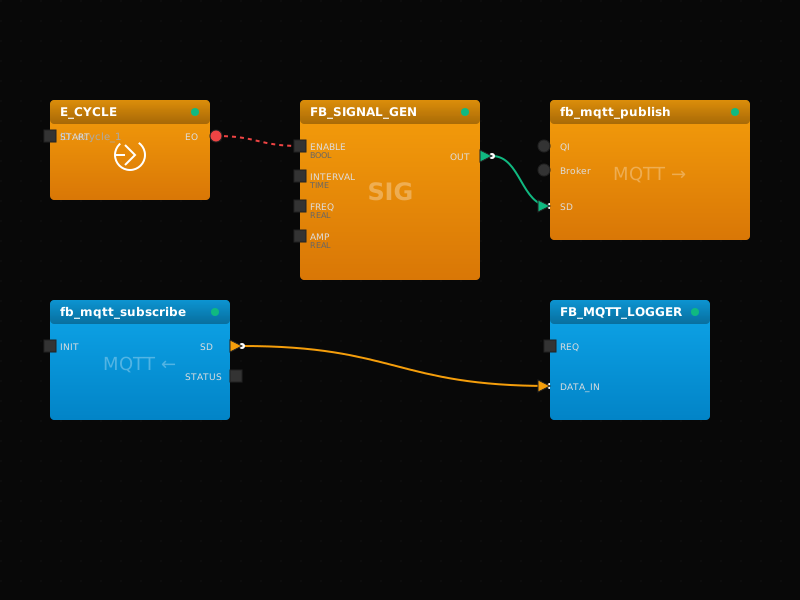
Design intent
Use this lens when implementing Safety surfaces across a fleet: define clear boundaries, make change snapshot-based, and keep operational signals observable.
- Safety comes from guardrails: snapshots, staged rollouts, and audit trails
- Blast radius shrinks when rollback is always available
- Operational visibility is part of safety, not optional tooling
What it is
Safety is implemented as a system of guardrails: strong identity, controlled deployment workflows, validated configuration, and observable runtime state.
Guardrails (practical)
- Immutable snapshots: deploy “this exact version” instead of “latest”
- Progressive rollouts: canary first, then expand with health gates
- Clear rollback path: return to a known-good snapshot quickly
- Operational visibility: prove the system is behaving after change
Design constraints
- Safety comes from guardrails: snapshots, staged rollouts, and audit trails
- Blast radius shrinks when rollback is always available
- Operational visibility is part of safety, not optional tooling
Architecture at a glance
- Define a stable artifact boundary (what you deploy) and a stable signal boundary (what you observe)
- Treat changes as versioned, testable, rollbackable units
- Use health + telemetry gates to scale safely
Typical workflow
- Define scope and success criteria (what should change, what must stay stable)
- Create or update a snapshot, then validate against a canary environment/site
- Deploy progressively with health/telemetry gates and explicit rollback criteria
- Confirm acceptance tests and operational dashboards before expanding
System boundary
Treat Safety surfaces as a repeatable interface between engineering intent (design) and runtime reality (deployments + signals). Keep site-specific details configurable so the same design scales across sites.
Example artifact
Implementation notes (conceptual)
topic: Safety surfaces
plan: define -> snapshot -> canary -> expand
signals: health + telemetry + events tied to version
rollback: select known-good snapshot
Why it matters
- Reduces risk of unintended changes reaching production
- Supports regulated processes and formal reviews
- Improves recovery when something goes wrong
Engineering outcomes
- Safety comes from guardrails: snapshots, staged rollouts, and audit trails
- Blast radius shrinks when rollback is always available
- Operational visibility is part of safety, not optional tooling
Quick acceptance checks
- Require approvals or gates for production snapshot promotion
- Roll out progressively with clear acceptance criteria
Common failure modes
- Drift between desired and actual running configuration
- Changes without clear rollback criteria
- Insufficient monitoring for acceptance after rollout
Acceptance tests
- Verify the deployed snapshot/version matches intent (no drift)
- Run a canary validation: behavior, health, and telemetry align with expectations
- Verify rollback works and restores known-good behavior
In the platform
- Deployments tied to immutable snapshots
- Access control and audit trails for critical actions
- Operational visibility for verification after rollout
Common safety failures
- Configuration drift between sites causing inconsistent behavior
- Lack of write ownership leading to conflicting actuations
- Silent degradations (telemetry gaps, partial adapter failures)
Implementation checklist
- Require approvals or gates for production snapshot promotion
- Roll out progressively with clear acceptance criteria
- Define rollback triggers and keep previous snapshots available
- Ensure audit trails for who changed/deployed what and when
Rollout guidance
- Start with a canary site that matches real conditions
- Use health + telemetry gates; stop expansion on regressions
- Keep rollback to a known-good snapshot fast and rehearsed
Acceptance tests
- Verify the deployed snapshot/version matches intent (no drift)
- Run a canary validation: behavior, health, and telemetry align with expectations
- Verify rollback works and restores known-good behavior
Deep dive
Practical next steps
How teams typically apply this in real deployments.
Key takeaways
- Safety comes from guardrails: snapshots, staged rollouts, and audit trails
- Blast radius shrinks when rollback is always available
- Operational visibility is part of safety, not optional tooling
Checklist
- Require approvals or gates for production snapshot promotion
- Roll out progressively with clear acceptance criteria
- Define rollback triggers and keep previous snapshots available
- Ensure audit trails for who changed/deployed what and when
Deep dive
Common questions
Quick answers that help during commissioning and operations.
What are the core safety guardrails?
Immutable snapshots, progressive rollouts, clear rollback, and strong observability so you can prove behavior after change.
What causes “unsafe” changes most often?
Drift (untracked edits), ambiguous write ownership, and silent degradations where telemetry/health signals are missing.
How do we reduce blast radius?
Use canaries, scope changes tightly, and require health gates before expanding. Keep break-glass access audited.